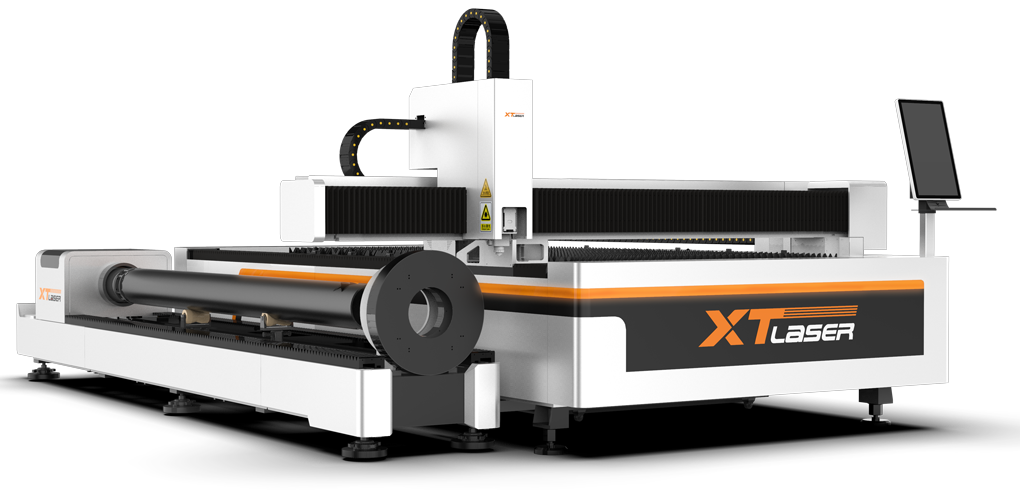

Fibre Laser
What are Fibre Lasers?
Briefly, fibre laser light is created by banks of diodes. The light is channelled and amplified through fibre optic cable similar to that used for data transfer. The amplified light, on exiting the fibre cable, is collimated or straightened and then focused by a lens onto the material to be cut. This is what constitutes Fibre Lasers
What makes Fibre Lasers better?
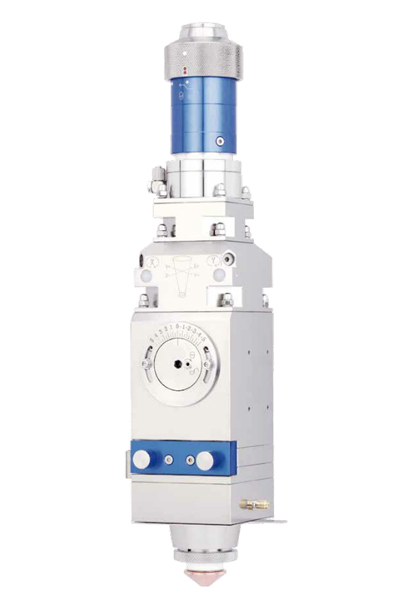
The creation of the light is 200% more efficient than via a traditional CO2 laser, and delivery is far simpler, with no expensive optical mirrors. The focusing lens, unlike on a conventional CO2 laser machine, is sealed in the cutting head and thus not a consumable item.
If one examines the price-to-performance ratio of the different models, the main cutting speed benefit of the higher-power 4 kW laser is in mid-range materials from 6 to 8 mm thick. There are also small benefits in thickness capacity when cutting non-ferrous materials, typically an increase of one gauge of material. This helps only customers who cut a lot of material in the 6 to 8 mm range or who wish to cover all eventualities, as it is their only laser cutting machine.
Fibre lasers can effectively replace CO2 Lasers in all practical aspects. With an IPG Power source, they excel at CNC Cutting, and other functions such as fibre welding and fibre engraving replace their CO2 counterparts. The Fibre laser is much more effective and efficient laser cutter.
What can you expect?
At African Machine Supplies, we pride ourselves on having access to the newest and best technology, and ensuring it optimises your business, allowing it to reach its maximum potential.
- Durability
As with all heavy machinery, industry can cause a lot of wear and tear. Our machines are built to be tough and durable, and will have many years’ worth of operating life. - Reduced Operating cost
Fibre laser requires less power and are more efficient that their CO2 counterparts, resulting in reduced operating costs and ultimately greater profits for your business - Power
Sometimes you need raw power to get a job done. With our range of fibre lasers, we have the right power output to match your task. With lasers reaching up to 10kW of power output, our machines can cut through anything.
At African Machine Supplies, we provide the right tool for you to get the job done. Contact us today to place your order!
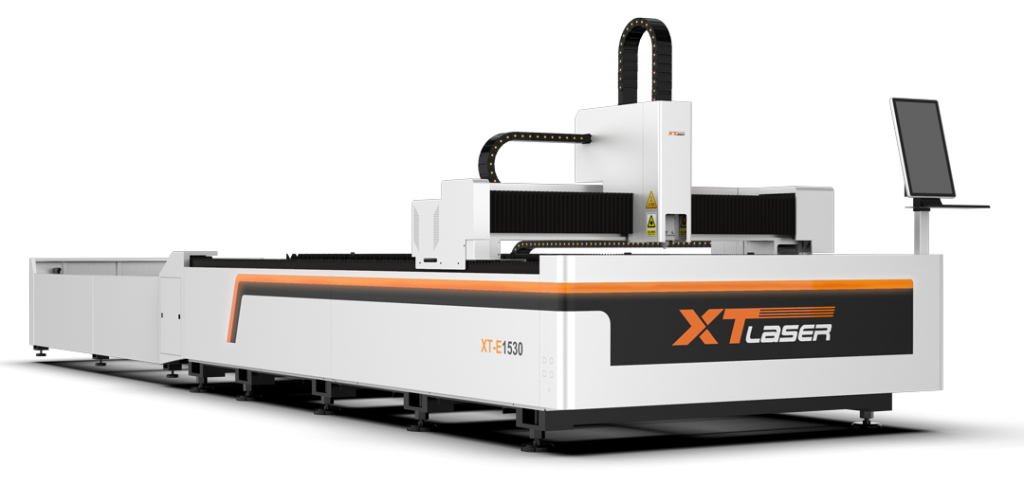

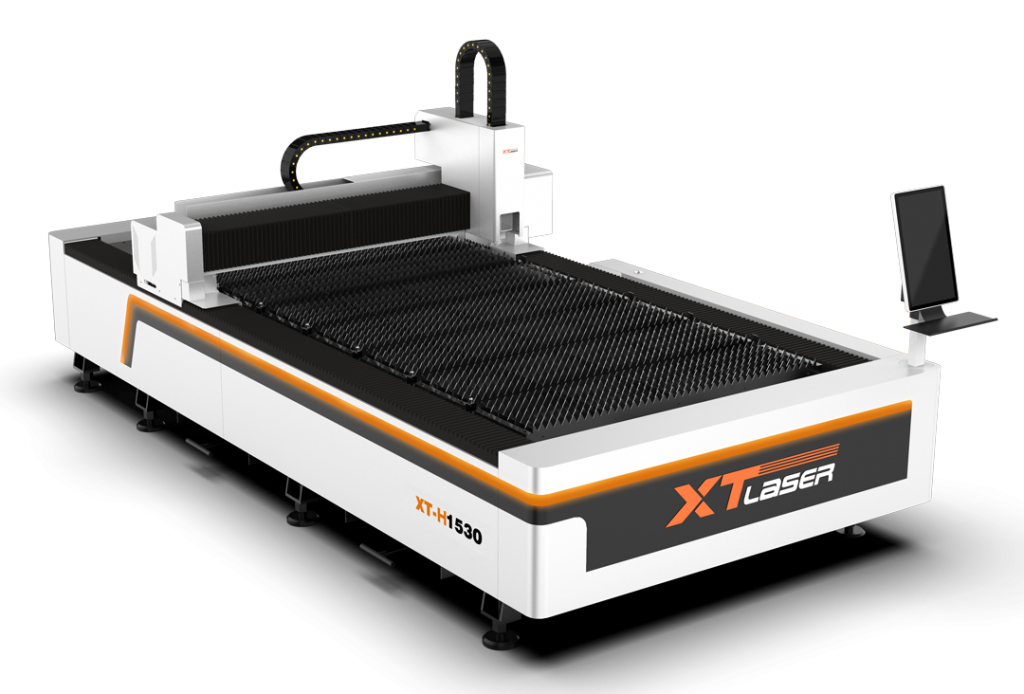
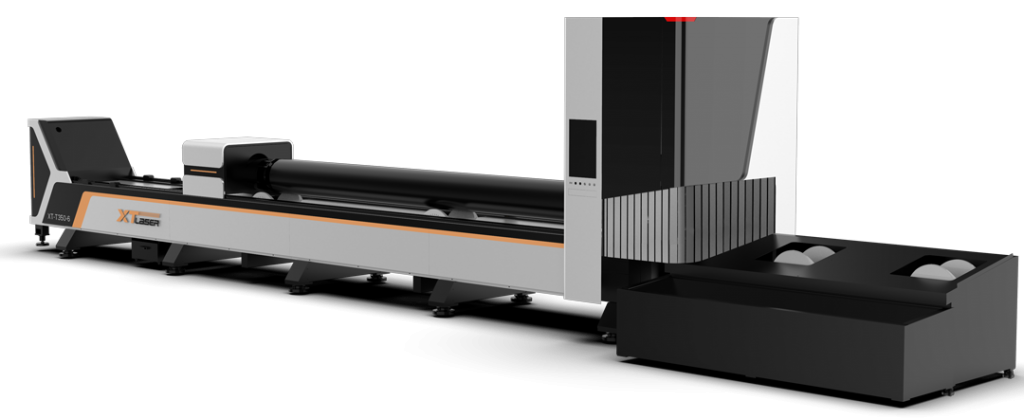
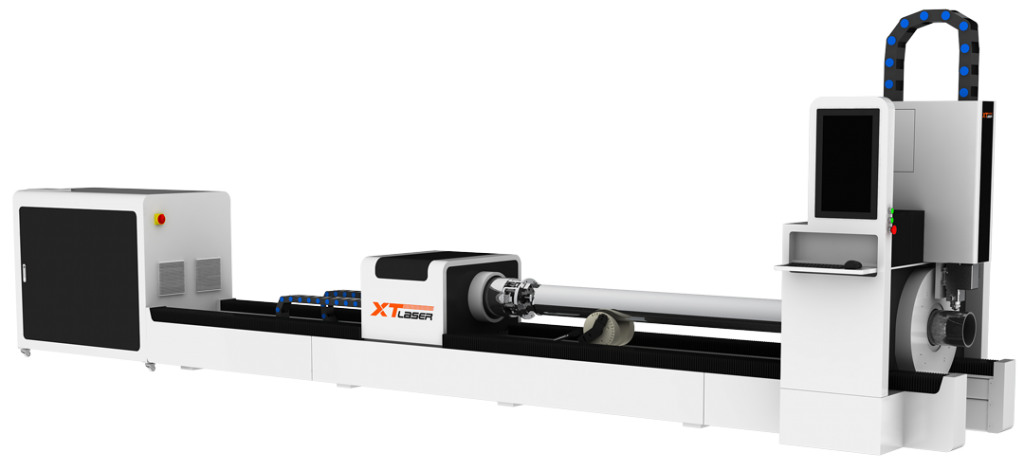

The Product
Briefly, fiber laser light is created by banks of diodes. The light is channeled and amplified through fiber optic cable similar to that used for data transfer. The amplified light, on exiting the fiber cable, is collimated or straightened and then focused by a lens onto the material to be cut.
Creation of the light is 200% more efficient than via a traditional CO2 laser, and delivery is far simpler, with no expensive optical mirrors. The focusing lens, unlike on a conventional CO2 laser machine, is sealed in the cutting head and thus not a consumable item.
If one examines the price-to-performance ratio of the different models, the main cutting speed benefit of the higher-power 4 kW laser is in mid-range materials from 6 to 8 mm thick. There are also small benefits in thickness capacity when cutting non-ferrous materials, typically an increase of one gauge of material. This helps only customers who cut a lot of material in the 6 to 8 mm range or who wish to cover all eventualities, as it is their only laser cutting machine.
At a glance
- 1. No moving parts or mirrors in the light-generating source, unlike a conventional CO2 resonator or disk laser. This has a distinct advantage in terms of reducing maintenance requirements and operating costs.
- Much higher electrical efficiency, resulting in considerably lower running costs. A 3 kW fiber machine uses one third of the power of a 4 kW CO2 machine of average across-the-board performance.
- Higher speeds when cutting thin material. Compared with the same 4 kW CO2 machine, the fiber laser is three times quicker in a straight line cutting of 1 mm mild, galvanized, or stainless steel and twice as fast when cutting 2 mm.
- An ability to cut reflective materials without fear of back reflections damaging the machine. This allows copper, brass, and aluminum to be cut without problems. 5. 50% longer servicing intervals and 50% lower servicing costs.
CO2 laser are gas lasers that are based on a carbon dioxide gas mixture, which is stimulated electrically. With a wavelength of 10.6 micrometers, they are mainly suited for working on non-metallic materials and on most plastics. CO2 lasers have a relatively high efficiency and feature a very good beam quality. They are therefore the most widely used laser types.
The resonator is the part of the laser that creates the cutting beam. It requires constant high-purity (grade 5 or better) CO2, nitrogen, and helium.
1950 – 1960s. Lasers were concurrently invented in the USA by Charles Townes, Arthur Schawlow, Gordon Gould and Theodore Maiman and in the USSR by Alexander Prokhorov and Nikolay Basov. 1964. The carbon dioxide laser (the CO2 laser) was invented in the USA by Kumar Patel.
The disadvantages of fiber compared with CO2 mainly relate to the cutting speed when processing thicker materials, typically above 5 mm, where the CO2 machine is faster in a straight line and also has much faster piercing times at the start of the cut. There is also the advantage of a smoother surface finish with the CO2 machine when cutting thicker materials.
- The main reason for purchasing a fiber machine was the speed of cutting thin (1 to 2 mm and up to 3 mm) materials.
- An important secondary reason was the lower running cost and the lower power consumption using fiber technology, which was particularly important in companies at the top end of the electrical supply limit in their workshops. The 4kW fiber and chiller, when on at maximum power, will consume approximately 18 kW. The equal-powered CO2 laser and chiller will consume approximately 70 kW.
Based on 1 kW fiber electrical running cost USD 2,700 compared to CO2 running cost USD 38,700 per year. - MTB Fiber laser 50,000 to 100,000 hours and CO2 20,000 hours
- Fiber no maintenance, consumables or cleaning and alignment of mirrors compared to N, CO2 and helium gas as consumable and regular maintenance amounting USD 62,500 per year.
- Optical path flexible cable compared mirrors and an optical path resulting in significant loss of beam quality and power
- Fiber laser optical beam is half of conventional CO2 laser 25 to 100 micron with cut speed up to 3 times on material up to 3 mm
The Product
Briefly, fiber laser light is created by banks of diodes. The light is channeled and amplified through fiber optic cable similar to that used for data transfer. The amplified light, on exiting the fiber cable, is collimated or straightened and then focused by a lens onto the material to be cut.
Creation of the light is 200% more efficient than via a traditional CO2 laser, and delivery is far simpler, with no expensive optical mirrors. The focusing lens, unlike on a conventional CO2 laser machine, is sealed in the cutting head and thus not a consumable item.
If one examines the price-to-performance ratio of the different models, the main cutting speed benefit of the higher-power 4 kW laser is in mid-range materials from 6 to 8 mm thick. There are also small benefits in thickness capacity when cutting non-ferrous materials, typically an increase of one gauge of material. This helps only customers who cut a lot of material in the 6 to 8 mm range or who wish to cover all eventualities, as it is their only laser cutting machine.
At a glance
Fiber Laser models
Briefly, fiber laser light is created by banks of diodes. The light is channeled and amplified through fiber optic cable similar to that used for data transfer. The amplified light, on exiting the fiber cable, is collimated or straightened and then focused by a lens onto the material to be cut.
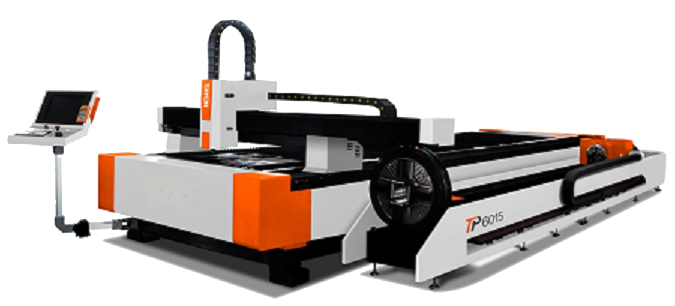
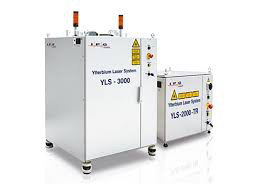
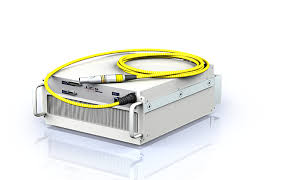
| Effective Cutting Area (m) | 3 x 1.5 |
| Application | MS/SS/AL/CU plate CNC cutting |
| Laser Medium | IPG fiber Laser Power |
| Max. Speed (m/min) | 80 |
| Laser Power (W) | 500 – 12000 |
| Accuracy (mm) | ≤0.12 |
| Cutting Thickness (mm) | 0.5 – 12 |
| Power Supply | 380V / 50Hz |
| Continuous Working Time | 24 Hrs. |
| Cutting table | Auto exchanged cutting table and Full protective cover as standard or option. |
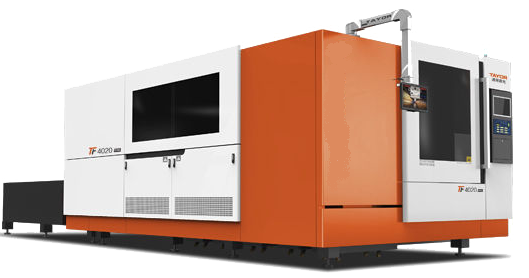
| Effective Cutting Area (m) | 4 x 2 |
| Application | MS/SS/AL/CU plate CNC cutting |
| Laser Medium | IPG fiber Laser Power |
| Max. Speed (m/min) | 80 |
| Laser Power (W) | 500 – 12000 |
| Accuracy (mm) | ≤0.12 |
| Cutting Thickness (mm) | 0.5 – 12 |
| Power Supply | 380V / 50Hz |
| Continuous Working Time | 24 Hrs. |
| Cutting table | Auto exchanged cutting table and Full protective cover as standard or option. |
| Effective Cutting Area (m) | 6 x 2 |
| Application | MS/SS/AL/CU plate CNC cutting |
| Laser Medium | IPG fiber Laser Power |
| Max. Speed (m/min) | 80 |
| Laser Power (W) | 500 – 12000 |
| Accuracy (mm) | ≤0.12 |
| Cutting Thickness (mm) | 0.5 – 12 |
| Power Supply | 380V / 50Hz |
| Continuous Working Time | 24 Hrs. |
| Cutting table | Auto exchanged cutting table and Full protective cover as standard or option. |
Our Clients